Kim Tan, Chairman, Springhill Management, UK

Kim Tan, Chairman, Springhill Management, UK

He’s one of the world’s biggest social VC with funds worth about US$250 million. With 30 active businesses running from healthcare and agriculture to tourism and construction, Kim Tan, is running at full steam keeping tabs on his investees, all of whom are facing a crisis unlike any they have witnessed before.

Relinquish or Extinguish

Relinquish or Extinguish ed

22 Feb 2019 – Singaporeans are not, if anything, dispassionate about our food. We go into a social media frenzy when other countries claim our food as theirs.

We are willing to spend an inordinate amount of time in food queues just to satisfy our palates. And so as we hear of more of our old favorites biting the dust and shuttering, we mourn deeply over the loss of yet another childhood fare – or is it another alternative to our national pastime?

It befuddles many minds why popular eateries like Moi Lum, one of Singapore’s oldest Cantonese restaurants, would serve its last dish in March after feeding many satisfied diners for 100 years. Then there are also the last suppers served by 55-year-old Chakey’s Serangoon Salt Baked Chicken and 63-year-old vegetarian restaurant Zen Fut Sai Kee.

All these businesses have taken the route to shut down because age has caught up with the owners and their children don’t want to take on the business. There is also an element of pride that has led to many closures. Without the next generation to hand age-old recipes down to, many proprietors would rather see the end of the road than to have their secrets commercialized or,  worse adulterated.

An emotional decision to close

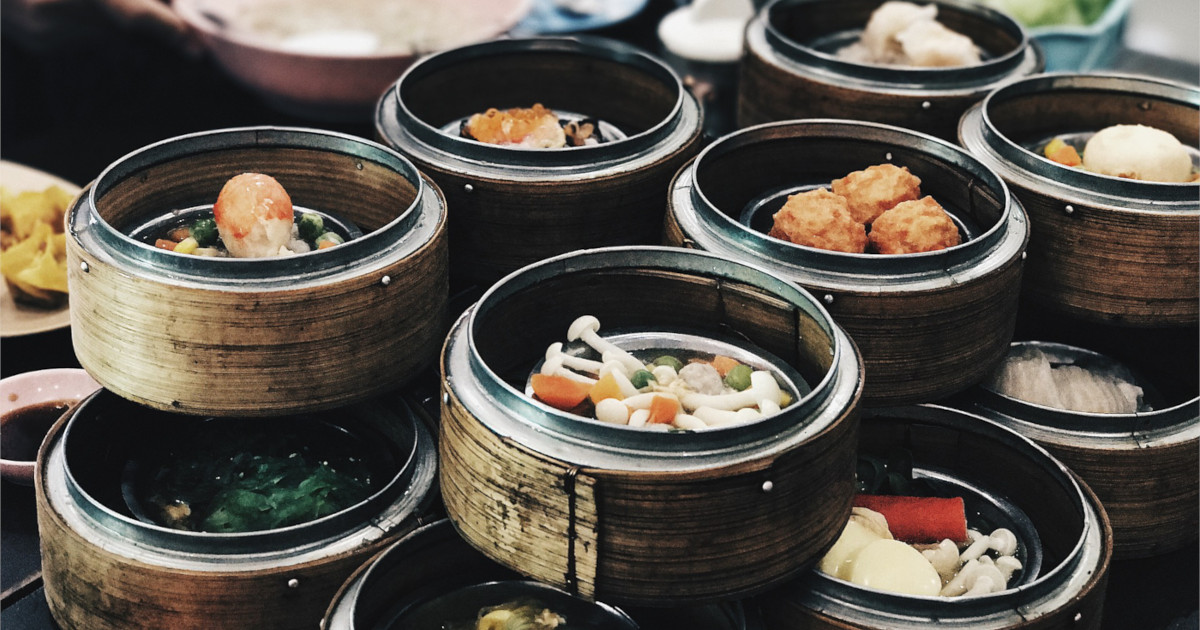
It was reported that the owners of a popular dim sum restaurant, Hua Nam, closed its doors in 2016 after making the traditional goodies from scratch for three generations. With no family members willing to take over, the owners opted to shut down to preserve the original recipe.

The dilemma for these traditional restauranteurs whether to continue the business is further complicated by the extremely challenging landscape quite unlike what they had experienced when they took over the businesses from their fathers in the 60s and 70s. High rentals, shortage of manpower, a saturated market with a smorgasbord of choices for the consumer make survival for small outfits with limited scale increasingly challenging.

The issue of succession is both an emotional and professional decision for family businesses. There are two broad areas in every business entity – management and ownership. Ownership refers to the shareholding while management, the operations. In most small businesses, ownership and management are one and the same.

In its simplest terms, succession can take three forms: First, it can take the happy outcome of ownership and management remaining in the hands of the family when the next generation is willing and competent enough to helm operations; Second, proprietors can employ professionals to run the daily operations while ownership and major decision-making remain in the family. Third, it can include other shareholders outside of the family who can steer operations and implement systems to ensure the company not only continues but is able to scale up.

As the options go down the wire, owners will likely feel threatened by the reduced control and share of profits. The nature of the food business lends itself to a certain pride of craftsmanship that makes relinquishing control akin to an identity crisis. Unlike manufacturing or property outfits, for instance, food businesses are typically started by chefs, not businessmen. In the early years, it was a matter of using their skills to survive.

As time passed and as their renown grew, however, much pride and passion were instilled in their art, more than their business. Chefs can be fixated on their products. Quality takes precedence over quantity. Expansion for them ought to focus on an elevation of their menu rather than an increase in the number of outlets.

But for the art to thrive, the platform on which it operates is just as crucial. For operations to grow there needs to be a driver who can focus on taking risks, expanding networks, and exploring opportunities.

In many of my conversations with Asia’s top entrepreneurs, passion for the product itself plays a small role in the growth of their businesses. It’s often the adrenaline rush they get when the business expands, when they solve an intractable problem, when they create successful brands, when the opportunity arrives to play a bigger role in philanthropy, or when innovation opens new doors. The combination of businessman and chef in one is a rare find.

The way forward if the business is to feed another generation is to take a leaf out of the books of those who’ve made a name from themselves as food entrepreneurs – or foodpreneurs.

Embrace systems and processes

International dim sum restaurant Din Tai Fung, famed for its xiao long bao, presents many lessons. The restaurant was started by Yang Bin Yi in 1972 in Taiwan. Word of his delicious wrapped soupy dumplings spread so rapidly that the seating expanded from half of their shopfront to all four floors of the lot in no time.

But it would take 24 years before the next outlet would open – in Shinjuku, Japan. A few years and further expansion in Japan led the food chain to finally open its own central kitchen back home in 2000. With the processes fine-tuned, outlets sprung up in quick succession throughout Taiwan. Consistency across all outlets was key, right down to each of their famous dumplings standardized with 16 grams of dough, five grams of pork, and folded in no less than 18 pleats.

Across their 150 outlets in 15 countries, Din Tai Fung is instantly recognizable with its glass-encased kitchens with chefs busily doling out the dumplings and other items on the menu almost by muscle memory. But all this clockwork precision takes effort. Owner Yang Chi-hua, the founder’s son, keeps tabs on operations by holding court in video conferences with branch managers daily.

Yang is of the rare breed of chef and businessman rolled into one. Not only has he been instrumental in expanding the business over the years, but he had also worked in the kitchen in the early years with the chef his father employed to start the business with. Yang has successfully balanced his penchant for maintaining the highest standards in food quality with the pragmatism of scaling up the operations at opportune times.

Finding the Right Partners

It’s said that Yang receives dozens of proposals a week from suitors looking to take the Din Tai Fung name to various parts of the world, as far as Russia and Mongolia. Most don’t get beyond his in-tray. For the owner, growth is not as much a priority as maintaining high standards. Finding the right partners along the journey is an instinct Yang seems to have honed over the years.

One such franchisee that Yang has partnered with in the last 16 years is Singaporean George Quek of the BreadTalk Group. Quek has led the charge since 2003 for Din Tai Fung in Singapore, Thailand, and most recently in the UK, with close to 30 outlets. Perhaps the key to Quek’s success is that he is both a franchisee and a franchisor, with his own stable of popular brands and an excellent feel of the markets he operates in.

Known as the King of Food Courts, Quek introduced Singaporeans to themed food courts in 1992 with Food Junction and has since fed the food fancies of Singaporeans with another food court, the Food Republic, local coffeeshop chain Toast Box and of course, the company’s eponymous bakery, BreadTalk. Today the Group runs 1000 outlets in 16 countries with numerous food brands under its management. Its last full-year revenue was close to S$600 million.

Here is a man who understands food trends, has an instinctive feel for consumer tastes and preferences, and dares to push the envelope in food presentation and experience. Quek’s innate feel of the food business began in Taiwan after dropping out of art college from a lack of funds. To make ends meet, he made and sold dragon beard candy in kiosks. He later learned to make noodles and introduced the Taiwanese to Singaporean hawker fare.

As a chef and business owner, Quek has developed the ability to sniff out a good brand and creates his own, and he has proven time and again, that he can serve up delectable returns for his partners and shareholders.

The science of business operations, the art of food

To sustain the food business for the long haul, owners must have the courage to operate apart from family members. While people are key to the success of any business, so are systems. Just as there’s an art to food creation, there is also a science to business operations.

Restaurant owners need to recognize the limitations of their gene pool and their own abilities and have the courage to share the responsibility of growing the business. They must also entertain the idea that quality and quantity can co-exist.

This can be a deeply emotional experience for one who has emerged from the shadow of the family business and who has retained sole ownership and decision-making for decades. But done with the right people and processes, heritage restaurants can continue to thrive and perpetuate not just the family legacy, but their gastronomic delights for generations to come.

(This article appeared in the Commentary section of channelnewsasia.com)

A Masterclass in Delivering Bad News

A Masterclass in Delivering Bad News

26 March 2020 – No one chooses to be the bearer of bad news. But leaders simply cannot run away from this responsibility. Yet, its delivery is as ominous as the crisis itself.

When Arne Sorenson, the CEO of Marriot Hotels, recently addressed staff in a video message on the hotel group’s response to the coronavirus crisis, he exhibited mastery over the art of delivering bad news with a balance of facts and emotion, determination and vulnerability and strength and concern.

The best-case scenario when delivering bad news is to engender the wholehearted support of the people who will bear the brunt of the crisis. Sorenson may very well have achieved that.


Opening with honesty

Sorenson dives straight into the objective of the video message with no fanfare and preamble. Here is a man on a mission with little time to spare for petty anecdotes and captivating openings. He gets straight to the significance of this message to him personally, branding it as “the most difficult video message we have ever pulled together”. He states from the outset he is invested in this crisis and is not shirking from his duty as the commander in chief.

He immediately pulls the heartstrings of his staff by acknowledging the behind-the-scenes discussion over the appropriateness of his appearance. He looked gaunt, tired, and had lost his hair from treatment for pancreatic cancer. It seems in PR practice almost counter-intuitive to show him in all his frailty at a time when the leader needs to be seen to be strong and in charge. But his self-deprecation in referring to his “new look” turns common practice on its head as he addresses the elephant in the room and takes control. He slides unobtrusively from his personal challenge to the “common crisis we face”, quietly stamping his selfless concern for staff.


Put people first

He segues into the business of the day by firstly addressing those who have been affected “as a patient, family member or friend”, expressing his concern for them. If anything, when delivering bad news to people, remember it’s the people and not the bad news that must stand out. This, Sorenson has done delicately well.


Be succinct and clear in delivering the facts

Sorenson points out unapologetically that the company has been winded by this crisis in spite of having been around for close to a century and having faced events like the Great Depression and World War Two. In fact, the prevailing crisis is worse that the recent meltdowns of 9/11 and the 2007 Global Financial Crisis, combined! It’s a bitter pill that cannot be sugar-coated. He pointedly presents the foreboding numbers – losses of 90% in China, while in other parts of the world, performance is down 75% below normal levels. This has forced hundreds of hotels to shut.

Clarity is what people seek in a time of crisis and delivering the sucker punch as it is, must be done. In many ways, that’s what brave leadership entails. Sorenson’s even tone as he releases the numbers reflects a leader who is determined to stare down the numbers.


Contingency Plans

All bad news must be met head-on with plans that are still within the company’s control. For the Marriot group, there’ll be a cut back in non-essential travel and a hiring freeze in most cases. There will be initiatives both at global and local levels, recognizing the autonomy of local operations who are better able to gauge their own needs.

Interestingly, Sorenson slips in a personal sacrifice in the middle of the litany of measures. He and John Marriot, the Chairman, will not take a salary for the entire year. In addition, the executive team will take a 50% pay cut.

Once again, this seems counter-intuitive from the standpoint of communication strategy. If he were to go to town about such a huge personal sacrifice, as most leaders would, he would’ve mentioned it at the start of the plans, or at the end. Known as the primacy and recency effects respectively, these are methods of emphases.

But burying his pro bono efforts for a year seems consistent with the self-effacing message he has been delivering. First, he brushes aside his obvious ill-health, expresses concern for those affected by the virus, and now, he mentions his own personal sacrifice almost as an aside.

This structure seems to work marvelously in drawing attention to the sincerity, and not the largesse, of the company’s leaders.


A light at the end of the tunnel

While being clear about the challenges and contingencies ahead, Sorenson begins his move towards the future. This is crucial for leaders in tough times, as workers look to them for hope and a vision. Without being overly optimistic, Sorensen points out some early signs of recovery in China as it emerges from the worst of the virus and begins to move the cogwheels of manufacturing once again. Slowly but surely, Sorenson claims, demand for lodging is showing signs of recovery as a result.

Sorenson is careful not to over-promise, stating “IF it holds, it MAY bode well” (emphasis mine) for the company moving forward. The tentative tone underlines the weight that Sorenson is mindful of bearing as he balances responsibility with optimism.


Vulnerability

In his penultimate message, Sorenson returns to the subject he started with and what apparently matters most to him – his employees. He reiterates how he’s “never had a more difficult moment than this one” and, for a moment, chokes slightly. With a barely audible tremble in his voice, he regrets having to tell his staff how they will be affected by the crisis.

To the skeptical, it may seem a matter of good showmanship. However, bearing in mind that this is a man who, in battling cancer, has had to deal with his own humanity, it may not be too far fetched an idea that he really was moved by the trail of disruption this crisis is leaving on the more vulnerable. The controlled emotion expressed over the difficulties his staff endears him even more than flowing tears.


Hope

Speaking in the tone of the great American frontiersmen, Sorenson concludes with his hope that when the crisis ends, “our guests will be eager to travel this beautiful world again”, opening vistas of hope and beauty, qualities in short supply in the current doldrums. Being the visionary that he is Sorenson calls on his staff to be ready, for “when that great day comes, we will be there to welcome them.” It would’ve been a picture-perfect ending, but not for the people person that Sorenson is. Instead of a grand gesture, he concludes with a routine encouragement to staff to take care of themselves.

Sorenson, through his sincerity, has demonstrated a masterclass in this unenviable task. It is a hard message to deliver and, as he is aware, a harder message to bear. But with his call to associates to keep their eyes on the rough and bumpy road ahead and their hearts on a new future, the staff at Marriot can still hold fast to what lies ahead – difficult as it may be, hopeful they must be.

Values-led Leadership at Work

Chick-fil-A

5 Nov 2019 – To the operators of Chick-fil-A, living out the company’s values isn’t just a mantra they tout to continue to hold on to a very profitable license – it’s a way of life. Maybe, just maybe, that’s one of the reasons this American fast-food chain holds pole position among industry peers with about US$4.6 million in sales per restaurant, over 60% more than its closest rival McDonald’s. Company estimates put growth at 20% year-on-year.

You could say the numbers are skewed since they have only 2500 restaurants compared to close to 14,000 McDonald’s in the US alone. But that’s where the facts and figures will intrigue.

Chick-fil-A as a brand has been around for 52 years. Now in the hands of the second generation, this private company is in no hurry to expand. And that’s not for the lack of interested parties. It receives about 20,000 applications a year from potential operators, out of which they grant the franchise license to a mere 80.

David Danisan, the only Malaysian to run a Chick-fil-A restaurant can attest to the rigorous selection process.

“I thought the 9 interviews I had to go through to land a job at Accenture was tough!” remarked the former consultant who migrated to the US.

He waited 2 years with multiple interviews and meetings before he was granted the coveted license. That’s close enough to the average wait time of 18 months for applicants.

Once you become part of the family, though, it’s relatively plain sailing. All it costs is US$10,000 for the license, while a McDonald’s franchise fee can set you back about US$45,000. What’s more, Chick-fil-A will pay for startup costs, too. By contrast, a McDonald’s restaurant can cost between US$1 million and US$2.3 million to set up – all on the franchisee.

The rigourous weeding-out process is necessary to make sure operators can meet the high ethical standards the company demands. For one, franchisees must live out the company’s purpose to “glorify God by being a faithful steward”. They must also agree to shutter on the most profitable day of the week for restauranteurs – Sunday. That’s a practice started by founder Truett Cathy when he set aside the day for his staff to “rest and worship”.

Some observers have described the company as “controversial” for being openly and unapologetically Christian in values and practices – norms that don’t sit well with left-wing activists.

Its recent attempt to enter the UK market met with a backlash from LGBT activists. Their grouse was against the parent company’s contributions to two Christian organizations in the US which, the protestors assert, represent biblical family structures that are antithetical to same-sex unions. This pushback led to the closure of the outlet at the end of its six-month lease.

When a company operates from absolute moral values, it is inevitable that they will fall prey to criticism and opposition to those who prefer the liberal view of self-determination. As recent events have shown, it can even be costly to hold on to biblical values.

But for organisations to last beyond one generation, it cannot stand on values that shift with the changing tides. It cannot even be defined by principles forged by the founder.

Instead only when it is entrenched in values that are from time immemorial – proven, attested, divine – and continues to demonstrate it in its operations, can it ride the ebbs and flows of volatility intact and, in Chick-fil-A’s instance, thriving.